
Uganda to certify skills gained outside classrooms – TVET Council boss

Extracted from PML Daily.
10 October 2026 | KAMPALA — Ugandans who acquire technical skills through informal work and practical experience could have their competencies formally recognised and certified under reforms being implemented by the TVET Council.
Moses Kasakya, the Executive Director of the TVET Council, said the council was finalising guidelines to assess and certify people who possess occupational skills but lack formal training qualifications.
Kasakya said the initiative would allow people to demonstrate their abilities against established competency standards, opening up opportunities for skilled workers who acquired their expertise outside conventional education institutions.
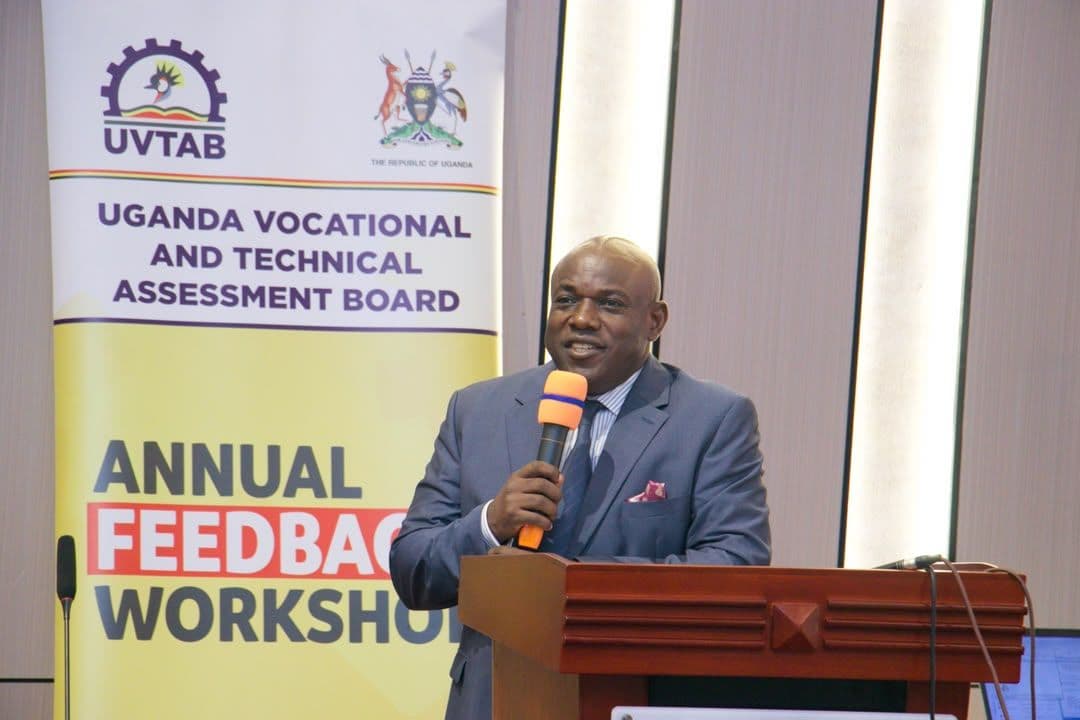
“Education is one way to gain skills, but it is not the only way,” Kasakya said during the Uganda Vocational and Technical Assessment Board (UVTAB) Stakeholders’ Feedback Workshop 2026.
He explained that applicants would not automatically receive certificates based on claims about their abilities but would have to undergo assessments to establish whether they meet the competencies required at their respective qualification levels.
The proposed arrangement is part of wider reforms aimed at making technical and vocational education and training (TVET) more responsive to Uganda’s labour market and economic ambitions.
Uganda targets to expand its economy from about $50 billion to $500 billion by 2040, with the government prioritising agricultural industrialisation, tourism and hospitality, mineral development and manufacturing, as well as science, technology and innovation.
Kasakya said achieving the target would require not only increased production but also a workforce equipped with the practical skills needed to support growth in these sectors.
“Producing more goods and services, however, will not transform the economy on its own. We also need people with the right skills to drive growth in these priority sectors,” he said.
He noted that TVET had for years operated under fragmented arrangements, with training responsibilities spread across different ministries and limited coordination and oversight.
The government has since consolidated the system under the Ministry of Education and Sports, with the TVET Act providing the legal framework for improved regulation, coordination and quality assurance.
The Act came into effect on March 15, 2025, while the TVET Council was inaugurated in July 2025 to guide the implementation of the reforms.
Kasakya said the council had established a seven-member governing body chaired by Malen Kagina, alongside a secretariat to support its operations.
Another milestone is the development of the Uganda TVET Qualifications Framework, which establishes the levels at which technical and vocational qualifications are organised.
Kasakya clarified that the framework had been revised to align with the broader education framework, which has eight levels. Under the revised arrangement, a diploma is placed at Level Four, unlike the initial draft that placed it at Level Five in a proposed 10-level structure.
The council is also seeking to strengthen the link between training institutions and employers to address the mismatch between graduates’ qualifications and the skills demanded by the labour market.
Kasakya said the council had established about 15 Sector Skills Expert Committees to identify employers’ needs and provide information to guide curriculum development and training standards.
The committees cover sectors including agriculture, manufacturing, tourism, business, sports, oil and gas, and minerals.
The council is also working to recognise emerging occupations, including event management and disc jockeying, as legitimate fields requiring professional skills development and recognition.
Kasakya said closer collaboration between training institutions and industry was essential to creating opportunities for learners.
He cited plans for students from Uganda’s technical colleges to travel to China to compete against students from other countries, with their participation supported by Chinese industries operating in Mbale.
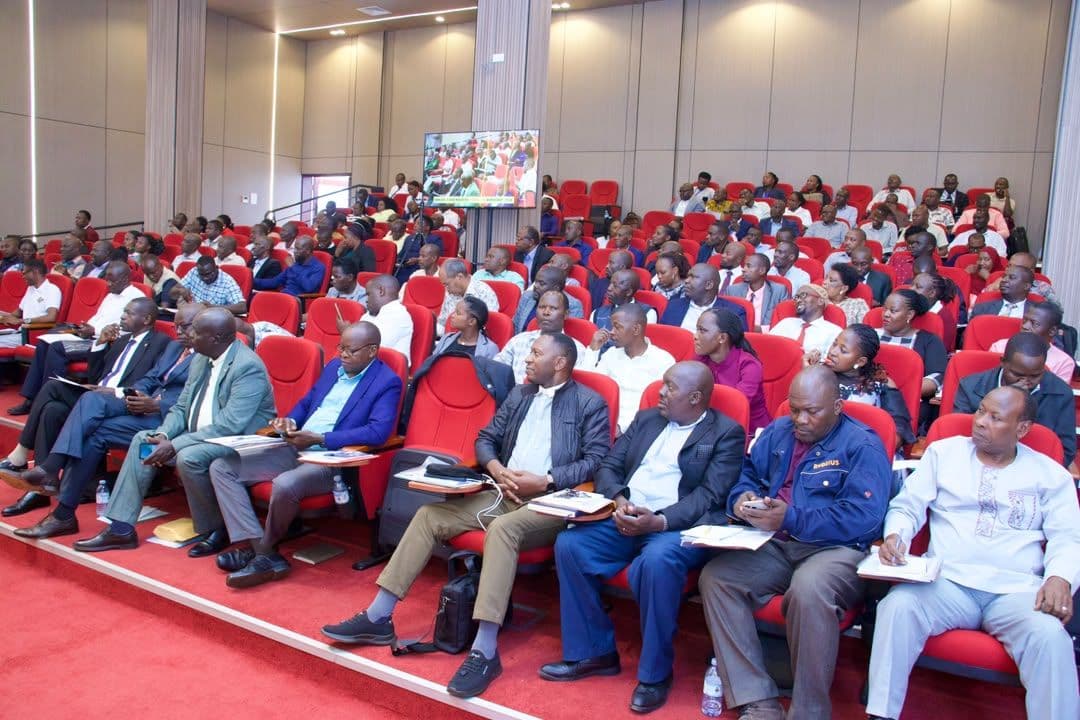
The workshop brought together TVET practitioners, trainers and other stakeholders to review progress in implementing reforms and identify areas requiring further improvement.
UVTAB Executive Secretary Onesmus Oyesigye said the board was also updating stakeholders on newly developed curricula, approved Assessment and Training Packages, and regulations governing assessments, including penalties for malpractice.
Oyesigye said the assessment rules had been gazetted, paving the way for their implementation, and urged institutions to familiarise themselves with the requirements.
UVTAB Deputy Executive Secretary in charge of Curriculum Development and Management, Jalia Nasaza, said 17 technology programmes had been developed and approved by the TVET Council, while 12 programmes in business education and training and one in home science education and training had been submitted.
She urged training institutions to align their programmes with labour-market demands and incorporate communication, entrepreneurship and teamwork skills alongside technical competencies.
Education Ministry Permanent Secretary Ketty Lamaro said the reforms would only deliver results if institutions prioritised practical competence, integrity and quality training.
Lamaro warned that certificates alone would not guarantee employment if graduates could not demonstrate the skills required by employers.
She urged trainers to embrace continuous learning and give trainees enough opportunities to practise, saying Uganda’s economic transformation depended partly on producing graduates capable of translating knowledge into productive work.
More photos