

UVTAB logo
Home/News & Updates/News & Stories

News & Stories

Official updates, milestones and stories from across UVTAB.

From the Board

Current institutional news in one trusted place

Stories are published directly by the UVTAB communications team and presented with their original publication dates and supporting media.

Stories
13
Latest
10 September
Team Uganda flagged off for WorldSkills Shanghai as leaders call for confidence, excellence and knowledge transfer
Featured story

Team Uganda flagged off for WorldSkills Shanghai as leaders call for confidence, excellence and knowledge transfer

10 September 2026

Kampala, 10 September 2026 | UVTAB Secretariat Uganda has officially flagged off its team for the upcoming WorldSkills Competition in Shanghai, China, from 22nd to 27th September 2026, with education and skills development leaders challenging the young competitors to compete with confidence, uphold discipline and professionalism, and return home with knowledge and innovations that can contribute to strengthening Uganda’s Technical and Vocational Education and Training (TVET) system. These competitions are held every two years, and the participants who represent Uganda at the global stage are winners selected through regional and national competitions involving trainees from TVET institutions across the country. The flag-off ceremony was held today at the UVTAB Secretariat, bringing together representatives from the Ministry of Education and Sports, TVET institutions, skills development stakeholders, WorldSkills Federation Uganda, and the Ugandan delegation preparing to represent the country on the global skills stage. The Minister of Education and Sports, represented by the Chairperson of the TVET Council, Ms. Allen Kagina, challenged Team Uganda to approach the international competition with confidence and determination, while using the opportunity to learn from some of the world's leading skills practitioners. Ms. Kagina said Uganda’s participation in WorldSkills should not be viewed solely through the lens of medals, but as an opportunity to benchmark the country’s training, assessment, occupational standards, technologies and methodologies against international practice. “WorldSkills is not simply about winning medals. Medals are important, so go and win them, bring them home,” she said. She, however, emphasised that the broader value of Uganda’s participation would be measured by what the delegation learns and brings back to the country. “When you return, you must bring back knowledge, innovations, technologies, partnerships and lessons learnt to benefit our technical institutions and the wider skills world,” Ms. Kagina said. She urged the competitors to recognise that they are not travelling to Shanghai merely as individuals, but as representatives of Uganda’s growing skills development sector. Their participation, she noted, provides an opportunity to expose Uganda’s training and assessment systems to international standards while identifying areas for continuous improvement. Additionally, the Executive Director of the TVET Council, Mr. Moses Kasakya, stated that Uganda’s participation in the WorldSkills Competition presents an opportunity to demonstrate the potential of young Ugandans while contributing to the continuous strengthening of the country’s TVET system. Mr. Kasakya said the WorldSkills platform gives young people an opportunity to demonstrate what they can achieve when they are provided with quality training, mentorship and platforms to showcase their talents. “WorldSkills allows you to demonstrate what our young people can do when allowed to demonstrate their talents,” he said. He congratulated the competitors for reaching the global stage, describing their participation as a reflection of growing confidence in the standards being promoted within Uganda’s skills development sector. The Deputy Executive Secretary, TVET Assessment at UVTAB, Dr. Wilfred Nahamya, similarly emphasised the importance of international exposure and benchmarking Uganda’s skills against global standards. Dr. Nahamya said WorldSkills provides a unique platform for young Ugandans to test their competencies in an international environment, interact with some of the best practitioners in the world, build professional networks and gain exposure that can contribute to their long-term careers. “We challenge our young people to measure themselves against international standards, learn from the best and continuously improve,” he said. He reaffirmed UVTAB’s commitment to working with WorldSkills Federation Uganda and other stakeholders to strengthen competency-based training and enhance the international competitiveness of Ugandan TVET graduates. Dr. Nahamya described skills as central to Uganda’s transformation, noting that investment in technical and vocational education and training is critical to preparing young people with competencies relevant to the changing world of work. “Skills are at the heart of Uganda’s transformation,” he noted. He encouraged the competitors to see themselves as ambassadors of the country, carrying with them not only their individual aspirations but also the hopes of Uganda’s young people. “When you enter the competition arena, you are carrying more than your individual ambitions. You are carrying the Ugandan flag, the hopes of our young people and the aspirations of our nation,” Dr. Nahamya said. He urged the team to use the platform to demonstrate the abilities and potential of Uganda’s young people skilled through TVET. “Do not be intimidated by the size of the competition. Instead, let the world see what Ugandan young people are capable of,” he said. He called on the team to compete with courage, discipline and confidence, stressing that success should not be measured solely by medals. While a medal would be a significant achievement, he said the experience gained through competing at the international level would have lasting value. “The medal is important, but it is not the only measure of success," he advised. According to Dr. Nahamya, the exposure, networks, courage and confidence gained from participating in the competition can continue to benefit the young competitors and Uganda’s skills sector long after the competition. In conclusion, the WorldSkills Competition provides a global platform where young professionals and skills practitioners from different countries come together to demonstrate excellence in a wide range of occupational skills. For Uganda, participation offers an opportunity to expose its young talent to international competition while creating avenues for learning, benchmarking and collaboration. For UVTAB, the participation also reinforces the importance of competency-based training and assessment that prepares learners not only to obtain qualifications, but to demonstrate skills that meet occupational and labour-market expectations. The experience gained in Shanghai is expected to contribute to broader conversations around improving skills training, assessment, occupational standards, technologies, and teaching and learning methodologies in Uganda. As Team Uganda prepares to take the country's skills story to the international stage, the message from the flag-off ceremony was clear: the journey to Shanghai is about more than competing. It is about showcasing Uganda’s talent, benchmarking its skills against the world, building international partnerships, and bringing home knowledge that can strengthen the country’s TVET system. With the Ugandan flag behind them and the aspirations of millions of young people ahead of them, Team Uganda now heads to Shanghai with inspiration to compete on a global stage, learn continuously, and demonstrate to the world what Uganda’s skilled young people can do.

Read full story

UVTAB Skills To End Employability Gap
10 September 2026

UVTAB Skills To End Employability Gap

Tap to read the full story

Read story
Executive Secretary calls upon staff to understand New Assessment Rules, commends curriculum milestone
7 September 2026

Executive Secretary calls upon staff to understand New Assessment Rules, commends curriculum milestone

Kampala- 4th September 2026 Speaking during the September UVTAB Staff Prayer Breakfast today, the Executive Secretary, Onesmus Oyesigye (CPA), called on staff to familiarise themselves with the laws, rules and regulatory frameworks governing the Board’s work, emphasising that effective service delivery must be anchored in a clear understanding of the legal and regulatory environment. Oyesigye highlighted the UVTAB Assessment Rules, 2026, which he noted have been duly signed and gazetted and are now available for reference and public use. He described the gazettement of the Rules as an important milestone in strengthening the governance, integrity and credibility of UVTAB’s assessment processes. He directed the Senior Legal Officer to circulate a soft copy of the Rules to all staff for reading, familiarisation and internalisation, while encouraging the Legal Team to organise a sensitisation and training session on the key provisions and practical application in the day-to-day execution of UVTAB’s functions. The Executive Secretary further urged staff to ensure that their decisions and actions are guided by the Rules and remain within the established legal and regulatory framework. He also announced a significant milestone in curriculum development (in accordance with the TVET Act, No. 3 of 2025, Section 95), revealing that 17 National Technician Diploma curricula submitted by UVTAB to the TVET Council have been approved by the Council. The approved curricula are now ready for implementation and advertisement for admission by the respective Technical Colleges and other relevant institutions for the Academic Year 2026/2027. He commended the officers involved in the curriculum development, quality assurance and approval processes, noting that the achievement reflects the commitment and hard work of the teams involved and encouraged the teams responsible to maintain momentum and conclude the remaining processes expeditiously. The Executive Secretary also shared insights from his participation in the 42nd Annual Conference of the Association for Educational Assessment in Africa (AEAA), held in Arusha, Tanzania, from 17th to 21st August 2026. “The conference brought together approximately 360 delegates from 28 countries, including policymakers, researchers and assessment practitioners from Africa and beyond, under the theme Rethinking Educational Assessment in the Age of Artificial Intelligence,” he reflected. Oyesigye noted that one of the key messages from the conference was the need for assessment systems to move beyond testing memorisation and increasingly assess competencies such as creativity, innovation, collaboration, ethical reasoning and the ability to apply knowledge to real-life challenges. He observed that the rapid development of Artificial Intelligence presents both opportunities and challenges for assessment, adding that the lessons and experiences gained from the conference would be useful in strengthening UVTAB’s assessment practices as the Board responds to emerging technological realities. On the sidelines of the AEAA conference, Oyesigye also participated in the Executive Committee meeting of the East African Association for Educational Assessment (EAAEA) in his capacity as Secretary General. The meeting, held on 20th August 2026, resolved, among other matters, to promote Kiswahili proficiency testing at the African Union level, with the aim of expanding employment opportunities and enhancing labour mobility within the East African region. The Executive Committee also welcomed and pledged its support for Uganda’s bid to host the 45th Annual Conference of the Association for Educational Assessment in Africa (AEAA) in 2029. Oyesigye noted that hosting such a major continental conference would require early preparation and called on staff, particularly those with strengths in research and academic writing, to begin preparing and submitting papers early. He emphasised that the papers would undergo review and quality assurance processes and therefore needed to be thorough, well-researched and of high quality. “Let us begin preparing now so that, by 2029, we have a strong body of research and professional contributions to showcase to Africa and the world,” he said. The Executive Secretary also commended staff who participated in the Annual Performance Review Workshop for FY 2025/26, convened by the Planning and Strategy Unit on 1st September 2026. He described the performance reviews as an important accountability and learning mechanism that enables management to assess progress against planned outputs and outcomes and identify areas for improvement. He called on staff to implement the agreed action points from the workshop, with emphasis on completing outstanding “must-do” activities in order to achieve the Board’s planned targets and ultimately deliver on its mandate. The September Prayer Breakfast was held under the 2026 theme drawn from Zechariah 4:6: “Not by might nor by power, but by my Spirit,” says the Lord Almighty. The Executive Secretary reminded staff that while excellence, discipline, commitment, and integrity remain essential in the execution of their responsibilities, the institution must also seek God’s wisdom, work together in unity, and depend on His guidance in fulfilling the mandate entrusted to UVTAB.

Read story
UVTAB opens July/August 2026 marking centre, reaffirms commitment to quality skills assessment
7 September 2026

UVTAB opens July/August 2026 marking centre, reaffirms commitment to quality skills assessment

KAMPALA - 03/September/ 2026 The Uganda Vocational and Technical Assessment Board (UVTAB) yesterday, Thursday, 03/September/ 2026, officially opened the designated marking centre for the July/August 2026 Assessments. The marking centre was officially opened by the Executive Secretary, Onesmus Oyesigye (CPA), who was represented by the Deputy Executive Secretary - TVET Assessment (DES-TA), Dr. Nahamya Wilfred. In his remarks, the Executive Secretary commended the assessors for their continued collaboration, commitment and professionalism in supporting the Board to ensure the smooth conduct of the marking exercise. He noted that the assessors' continued commitment is critical to maintaining the credibility, fairness and integrity of the assessment process, and encouraged them to uphold the highest standards of professionalism throughout the marking exercise, highlighting that effective marking is a critical component of ensuring that candidates are fairly and accurately assessed against the required occupational standards. The Executive Secretary further highlighted the strengthening of UVTAB’s human resource capacity following the appointment of new staff to various positions within the Board. He noted that the additional human resource capacity will enable the Board to address some of the challenges previously encountered during assessment and marking exercises and improve the efficiency of its operations. Dr. Nahamya emphasised that the Board's work goes beyond conducting assessments. Through its mandate, UVTAB works to assess and certify occupational competences, promote standardisation of skills and support a credible skills development system that responds to the needs of the world of work. Dr. Nahamya further called upon all assessors to uphold professionalism, accountability and adherence to assessment standards, noting that the credibility of Uganda’s skills assessment and certification system depends on the collective responsibility of institutions, assessors and UVTAB to maintain the highest standards throughout the assessment process. In this regard, he encouraged staff and assessors to work closely together, maintain professionalism, and ensure that the marking process is conducted with the highest level of accountability and integrity. Additionally, the Deputy Executive Secretary - Curriculum Development and Management (DES-CDM), Ms Jalia Nasaza, was represented at the opening by Manager Quality Assurance, Mr Wamani Godfrey Bagamba, who delivered her remarks on the importance of strengthening the systems that underpin quality skills development. He highlighted the progress made in the development of employer-led TVET curricula, noting that 17 curricula have been submitted for approval to the TVET Council, marking an important milestone in UVTAB’s efforts to strengthen curriculum development and align TVET programmes with the needs of industry and the world of work. “Once the curricula receive approval, Training of Trainers (ToT) will commence to equip trainers with the knowledge and competencies required to effectively implement the employer-led TVET curricula and strengthen the delivery of programmes that respond to labour market demands,” he revealed. The development of these curricula is part of UVTAB's broader effort to ensure that training and assessment are aligned with the competencies required in the workplace. By working with employers and other stakeholders, the Board seeks to ensure that what is taught, assessed and certified reflects the actual skills demanded by industry. Mr. Bagamba further emphasised the importance of quality assurance throughout the marking, assessment and certification process, noting that strong systems, competent personnel and relevant curricula are essential to producing graduates who are capable of performing effectively in the workplace. As the marking exercise gets underway, UVTAB remains committed to quality assessment, credible certification, and the recognition of competencies for the world of work and TVET curriculum development and management.

Read story
UVTAB cautions Institutions and Assessors on compliance and professionalism
4 September 2026

UVTAB cautions Institutions and Assessors on compliance and professionalism

Kampala- 3rd September 2026 The Deputy Executive Secretary - TVET Assessment (DES-TA), Dr. Nahamya Wilfred, cautioned institutions on the need to comply with UVTAB regulations governing the timely submission of candidates’ coursework in accordance with the TVET Act, No.3 of 2025, Section 79 (1) (e), during the Official Opening of the designated marking centre for the July/August 2026 Assessment on 3rd September 2026. He urged institutions to adhere to the stipulated timelines to ensure that the assessment and certification processes are conducted efficiently and without unnecessary delays. He also tasked assessors with submitting assessment results to UVTAB promptly upon completion of the assessment exercise, emphasising that timely submission is essential to maintaining an efficient, transparent and credible assessment and certification process and the timely release of assessment results. On practical assessments, the DES-TA stressed that the Board ensures that assessments are conducted by competent, appropriately qualified personnel in accordance with the prescribed occupational standards. He reminded assessors that the integrity of UVTAB’s certification and assessment depends on ensuring that every candidate is assessed fairly and that assessors possess the requisite technical competence. The DES-TA called upon all assessors to uphold professionalism, accountability, and adherence to assessment standards, noting that the credibility of Uganda’s skills assessment and certification system depends on the collective responsibility of institutions, assessors and UVTAB to maintain the highest standards throughout the assessment processes. #UVTABUpdates #OpeningofMarkingCentres

Read story
The Invisible Backpack: UVTAB staff encouraged to prioritise mental health and wellbeing
4 September 2026

The Invisible Backpack: UVTAB staff encouraged to prioritise mental health and wellbeing

Kampala, 4th September 2026 - “I am okay” does not always mean someone is okay. The Executive Secretary of the Uganda Vocational and Technical Assessment Board (UVTAB), Onesmus Oyesigye (CPA), has called for greater attention to the mental and physical well-being of staff, noting that changes in a colleague’s behaviour may sometimes point to challenges that are not immediately visible. He observed that when a staff member who would ordinarily be reserved begins talking excessively, for instance, it could be a sign that the individual is dealing with an underlying mental health challenge. He stressed the importance of looking beyond outward behaviour and creating an environment where staff can be supported rather than judged. Oyesigye said Management has therefore deemed it necessary to organise mental health talks as often as possible, as part of its commitment to safeguarding the health, wellbeing and overall welfare of staff. The initiative, he noted, is intended to encourage staff to pay attention to their own wellbeing while also becoming more conscious of the signs that colleagues may be struggling. The remarks were made during the Secretariat’s Prayer Breakfast held today, 4th September 2026, where staff were encouraged to pay greater attention to their mental and physical wellbeing. The session, led by Ms. Wako Purity, a nutritionist, coach, and Chief Executive Officer of Kwera Bits, used the analogy of an “invisible backpack” to describe the emotional and mental burdens people carry that may not always be visible to those around them. “What are you carrying around in your invisible backpack?” Ms Wako asked staff, challenging them to reflect on the pressures, disappointments, responsibilities, and experiences they may be carrying silently. She noted that people respond to stress differently. While some may become withdrawn, others may scream, become irritable, overeat, isolate themselves, or experience changes in their usual behaviour. However, she cautioned that these responses should not simply be dismissed as bad behaviour. Ms. Wako reminded staff that the body often communicates warning signs before it reaches a point of breakdown. She emphasised that prolonged stress can affect sleep, eating habits, emotions and general physical wellbeing, noting that mental and physical health are closely connected. She encouraged staff to listen to their bodies and recognise when they need to slow down and rest. “Once the body shuts down, work will always go on,” was part of her message, reminding staff that organisations and responsibilities continue, but an individual's health must not be sacrificed in the process. She encouraged staff to be intentional about rest, watch what they eat, and find trusted people with whom they can share and relate. The session also challenged the notion that helping someone through a difficult period is the sole responsibility of psychologists or professional counsellors. Ms. Wako encouraged staff to cultivate kindness and empathy towards colleagues, noting that people often do not speak about what they are going through because they fear being judged. She urged staff to understand people rather than trying to change them, recognising that individuals respond to situations differently. “You cannot change the behaviour of your colleagues, but you can change how you react to them,” she told the staff. The message was a reminder that a supportive workplace can begin with something as simple as listening without judgement, showing kindness and creating an environment where people feel safe enough to speak. Ms.Wako further challenged staff to reflect on their purpose and contribution within the institution. She encouraged UVTAB staff to ask themselves important questions: “Why am I in this particular office? What am I contributing to the organisation? Am I adding value?” Understanding one's purpose, she explained, can help provide clarity and reduce unnecessary stress. She also emphasised the importance of setting boundaries and knowing when to stop. For a workforce operating in an environment that demands commitment, precision and continuous delivery, the ability to recognise personal limits is essential to maintaining sustainable performance. She reminded staff that mental health should not be understood only through the lens of sickness or mental illness. “Mental health is not necessarily sickness or madness, but all that you go through is connected to how your mental health works,” she said. Her message placed mental wellbeing within the broader realities of everyday life, from workplace pressures and relationships to sleep, eating habits, stress and how people respond to challenges. She called upon institutions to strengthen mechanisms that support the wellbeing of their staff and help individuals identify and build on their strengths. Today’s Prayer Breakfast ultimately became more than a moment of prayer and reflection. It offered UVTAB staff an opportunity to look inward and consider the invisible burdens that colleagues, and indeed each individual, may be carrying. As UVTAB continues to deliver on its mandate of developing and managing employer-led TVET curricula, assessing and certifying skills, and contributing to Uganda’s skills development agenda, the wellbeing of the people behind that work remains equally important. Sometimes, the most important thing a colleague needs is not a solution, but someone willing to listen. Because behind every desk, every assignment, and every professional role is a human being, and every human being carries an invisible backpack. Your health matters. Your mental health matters. And it is okay to put the backpack down and rest. #UVTAB #MentalHealthMatters #UVTABPrayerBreakfast #StaffWellbeing #WorkplaceWellbeing #MentalHealthAwareness

Read story
UVTAB Board of Directors undertake governance training to strengthen leadership and institutional oversight
13 August 2026

UVTAB Board of Directors undertake governance training to strengthen leadership and institutional oversight

UVTAB has commenced a governance training programme for its Board members and members of top management, aimed at strengthening their understanding of corporate governance, Board responsibilities and effective institutional oversight. The two-day training, taking place from today, 13th August 2026 to 14th August 2026, brings together board members and members of top management and is facilitated by the Institute of Chartered Secretaries and Administrators (ICSA) Uganda. The training programme focuses on succession planning, Board evaluation, corporate governance, Board roles and responsibilities, committee structures, effective Board meetings and emerging trends shaping modern boardroom conversations. In her opening remarks, the Board Chairperson, Associate Professor Dorothy Okello welcomed the new members and emphasised the importance of establishing a clear understanding of the respective roles of the Board and Management. She noted that the Board brings together members representing different constituencies and stakeholder interests, creating a diversity of experience and perspectives necessary for effective governance of UVTAB. The Chairperson explained that while the Board provides strategic oversight and governance, management is responsible for the day-to-day running of the institution. “The Board has its own roles. Management also has its own roles.” She emphasised that understanding where the Board's mandate begins and ends, and where Management assumes responsibility, is essential for maintaining effective institutional leadership and accountability. Prof. Okello also encouraged the Board members to create an environment that allows for candid and constructive conversations. She noted that there may be instances when the Board needs to deliberate privately and openly on matters affecting the institution. She encouraged members to respect such spaces for reflection and vulnerability, noting that they are important in building a cohesive and effective Board. In addition, Eng. Rose Nakafu, a Board member, further welcomed the participants and encouraged them to actively participate in the training and draw from the experiences of Board members. “The training programme is building on previous governance engagements undertaken by the Board and seeks to deepen members' understanding of their responsibilities as custodians of institutional governance,” she emphasized. The Executive Secretary, Onesmus Oyesigye (CPA), underscored the significance of the training in strengthening the institution's governance architecture. He commended the Board members and top management members for making time for the two-day programme and noted that a shared understanding of governance principles is essential to effective oversight, accountability and the successful execution of UVTAB's mandate. The training programme covers areas including; succession planning and Board evaluation; corporate governance principles; the structure, roles and responsibilities of Board committees; best practices in Board meetings and committee papers; mental health; and emerging trends in boardroom conversations, including the growing influence of digital technology, artificial intelligence and cybersecurity. These areas are increasingly important as institutions navigate a rapidly changing operating environment that requires the Board to remain informed, strategic and responsive. The participants were reminded that all governance and leadership efforts must ultimately contribute to UVTAB's mandate of ensuring credible assessment, curriculum development and certification of competencies for the world of work. As UVTAB continues to grow as Uganda's national assessment body, corporate governance is critical in ensuring effective systems to support the Board in executing their roles of oversight management and policy direction and management to implement the decisions of the Board. The training therefore marks another step towards building a Board that is well-equipped to provide strategic leadership, oversight and guidance while allowing Management to effectively execute the day-to-day responsibilities. “Assessment for Employable Skills”

Read story
UVTAB registers the smooth start of the July/August 2026 assessments across the country
10 August 2026

UVTAB registers the smooth start of the July/August 2026 assessments across the country

10 August 2026 | Nyamitanga, Mbarara A total of 55,788 candidates across the country have today, 10th August 2026, commenced the July/August 2026 Uganda Vocational and Technical Assessment Board (UVTAB) assessments. Of these candidates, 16,831 are female candidates. The Board continues to assess and certify skills in line with its mandate under the TVET Act No. 3 of 2025. A team from UVTAB, led by the Board’s communications team, visited Nyamitanga Technical Institute to witness the commencement of the assessments and engage candidates, assessors and the institution on the start of the assessment exercise. During the visit, the Principal Communications Officer, Kambaho Narasi Anyijuka, briefed the media on the commencement of the July/August 2026 assessment series, emphasizing the need to observe the UVTAB assessment rules and regulations for the smooth conduct of assessment. He further emphasized that candidates should desist from any form of malpractice. “I wish to caution all candidates to desist from being involved in any form of malpractice,” Kambaho noted. The team also toured different sections of Nyamitanga Technical Institute, where they observed several practical and real-life projects undertaken by students as part of their training. As part of its commitment to ensuring that assessment is accessible to all candidates, UVTAB has deployed support personnel to assist candidates with special needs during the assessment period. The board registered a total of 153 candidates with special needs for the July/August 2026 assessments. Among the candidates undertaking the assessments at Nyamitanga Technical Institute is Ainemukama Solomon, who was born with a hearing impairment. During the assessment, Solomon is being supported by Amutuhaire Vanessa, a support personnel provided by UVTAB to facilitate effective communication and ensure that he is able to participate fully in the assessment process. Speaking to the media, Solomon shared his experience as a candidate with a hearing impairment and expressed his appreciation for the support provided to enable him to undertake the assessment. The commencement of the July/August 2026 assessments marks another important step in UVTAB’s mandate to assess, certify and standardize skills, providing Ugandans with an opportunity to have their competencies formally recognized. These assessments will continue at accredited assessment centres across the country until 21st August 2026.

Read story
UVTAB Unveiled as Official Partner of the Ankole Cup 2026
16 July 2026

UVTAB Unveiled as Official Partner of the Ankole Cup 2026

Kampala, Uganda | 16th July 2026 The Uganda Vocational and Technical Assessment Board (UVTAB) has officially been unveiled as a partner of the Ankole Cup 2026, marking the beginning of a strategic collaboration aimed at advancing sports development through assessment, certification, and development of competency-based curriculum in Uganda. The partnership was announced during a press conference held today, 16th July 2026, at Kati Kati Restaurant, where UVTAB joined a host of other sponsors and partners in reaffirming their commitment to the annual Ankole Cup tournament, which has become a platform for identifying and nurturing sporting talent from across the Ankole region. The Ankole Cup continues to attract support from key stakeholders, including Members of Parliament, sports administrators, coaches, trainers, corporate partners, and football enthusiasts, underscoring its growing importance in Uganda's sports ecosystem. Speaking during the unveiling ceremony by the Ankole Cup organising committee, UVTAB Principal Communications Officer, Mr Narasi Kambaho, described the partnership as a significant milestone in strengthening sports professionalism as part of the broader skills development agenda."This partnership marks the beginning of a shared commitment to professionalise sports in Uganda through assessment, certification, and development of competency-based curriculum for various sports occupations in Uganda", Mr Kambaho said. He noted that under the TVET Act, 2025, Section 77 (5), UVTAB is mandated to assess and certify competences obtained through formal and informal Technical and Vocational Education and Training (TVET) and develop TVET curricula and training packages across various occupations, including sports education and training. "Working alongside fellow stakeholders, we aim to strengthen sports development from the grassroots to the national level, creating clear pathways for talented players to progress from competitions like the Ankole Cup into Uganda's leagues and beyond," he added. Mr Kambaho emphasized that the partnership reflects UVTAB's commitment to ensuring that sports practitioners, including athletes, coaches, referees, trainers, and other professionals, have opportunities to acquire nationally recognised certification that enhances employability and professional growth. He expressed optimism that the collaboration would extend beyond this year's tournament to support the long-term development of sports as a lucrative professional career in Uganda. The Ambassador for the players of the Ankole Cup, Paul Mucureezi, thanked UVTAB for partnering with the Ankole Cup tournament and applauded the Board's commitment to sports development. "I thank UVTAB for sponsoring the Ankole Cup 2026. This is a great initiative that will contribute to the growth of sports professions in our country," Mucurezi said. He encouraged participating teams and players to give their best throughout the tournament, noting that the partnership presents an added incentive for excellence on the pitch. "I encourage all players to work hard and compete fairly because opportunities await, including winning the Man of the Match award. Let this tournament be a platform to showcase your talent and discipline," he urged. With preparations now in high gear, organisers anticipate one of the most competitive editions of the Ankole Cup, bringing together talented footballers, passionate fans, and a growing network of partners committed to promoting sports excellence. Osborn Mushabe, Chairperson of the Organising Committee in charge of Publicity, commended the UVTAB for its sponsorship of the tournament, describing the Board's support as a significant contribution to its successful organisation. The sponsorship includes the provision of tracksuits for the two finalist teams and Members of Parliament, press jackets for media personnel, as well as sponsorship of the Man of the Match award and referees throughout the tournament. "UVTAB's contribution is a huge boost towards the success of the tournament, and we are indeed grateful for the sponsorship," Mushabe said. For UVTAB, the partnership represents more than tournament sponsorship. It is an opportunity to align sports with skills development by supporting the sector's professionalisation through competency-based assessment, certification, and curriculum development for various sports professions. As the Ankole Cup 2026 kicks off, UVTAB looks forward to a successful tournament and a fruitful partnership that will help build structured pathways for sports growth and development from grassroots competitions to national and international opportunities. UVTAB is going to work closely with the Sports academies, sports clubs and sports to streamline the conduct of assessment of trainees in the various sports disciplines, develop curricula for various sports occupations, including accreditation of Sports training academies as UVTAB Assessment Centre.

Read story
Building Skills That Match the Future: Inside UVTAB's Drive to Shape Employer-Led TVET Curricula
15 July 2026

Building Skills That Match the Future: Inside UVTAB's Drive to Shape Employer-Led TVET Curricula

For three days, the conference room was filled with a familiar sound, not the hum of machinery found in workshops or the buzz of classrooms, but the steady exchange of ideas. Around tables sat curriculum specialists, engineers, accountants, ICT professionals, business leaders, TVET trainers, HR practitioners and industry experts, each bringing a different perspective but united by one purpose of ensuring that what is taught in Uganda's Technical and Vocational Education and Training (TVET) institutions prepares learners for the realities of today's workplace. A consultative workshop, convened by the Uganda Vocational and Technical Assessment Board (UVTAB) together with the Sector Skills Expert Committees (SSECs), was held from 6th to 8th July 2026 at Arch Apartments and Hotel, Ntinda, to review the newly developed Technician Diploma curricula in Business and Technology Education and Training. The exercise forms part of UVTAB's mandate under Sections 79 and 95 of the TVET Act, No. 3 of 2025, which entrusts the Board with developing and managing curricula in consultation with industry and TVET providers before approval by the TVET Council. Prior to the consultative workshop with the Sector Skills Expert Committees (SSECs), UVTAB undertook a series of structured curriculum development activities. These included a Training Needs Survey to identify industry workforce demands and skills gaps, occupational mapping to establish existing occupations across the Technology, Business and Education sectors, occupational profiling to define the duties and responsibilities of each occupation, competence profiling to determine the knowledge, skills and competencies required, and module development based on the validated competence profiles. These processes laid the technical foundation for the consultative workshop, where industry experts reviewed and validated the draft competency-based curricula to ensure they remain relevant, responsive and aligned to labour market needs. The significance of the workshop lay in a simple but critical question: Are Uganda's graduates being prepared for the jobs employers actually need? That question guided every discussion throughout the workshop. A total of 130 participants took part in the review, including 100 representatives from industry and 30 TVET trainers. Their task was to examine 34 draft Technician Diploma curricula, in areas of Technology Education and Training and Business Education and Training, to determine whether they align with the human capital priorities of the National Development Plan IV (NDP IV) and Uganda's employer-led Competency-Based Education and Training (CBET) system. Unlike traditional curriculum reviews that focus largely on academic content, this exercise placed employers at the centre of the conversation. Industry experts scrutinized every module from the perspective of the workplace, asking whether graduates would possess the competencies needed to perform tasks in the industry. Every section of the curriculum came under review. Participants examined whether learning outcomes were observable and measurable, whether module objectives were clearly defined, whether the sequencing of learning made practical sense, whether trainee entry requirements and trainer qualifications were in line with the TVET Qualifications Framework, and whether the recommended tools, equipment, consumables, and assessment guidelines reflected current industry practice. Rather than simply approving the drafts, participants documented detailed recommendations through the SSEC-UVTAB Curriculum Critique Matrix. These recommendations will now be incorporated by UVTAB before the curricula are submitted for final approval by the TVET Council. This collaborative nature of the workshop reflected a growing shift in Uganda's TVET system, from designing education for learners to designing education with employers. Closing the workshop, Mzee Obadiah Lalobo, Board Member and Chairperson of the Committee on Curriculum and Industry Engagement, reminded participants that the quality of the country's TVET system depends on the expertise of those who understand the workplace best. "The depth of your industry experience is the very foundation of this process. It is your critical eye that ensures our training and assessment packages are not just theoretically sound, but practically viable for the modern workforce." He noted that the knowledge shared during the workshop represents an important contribution to Uganda's skills development agenda and affirmed that every participating Sector Skills Expert Committee member and industry expert would be formally acknowledged in the finalized Curriculum, Training and Assessment documents. "We deeply value this intellectual capital. Every participating Sector Skills Expert Committee member and industry expert will be formally recognized for their contribution in the finalized Curriculum, Training and Assessment documents." He further emphasized that the collective effort goes beyond curriculum development. "Our shared commitment is to build a truly employer-led, competency-based system that directly serves the economic priorities outlined in the National Development Plan IV." For many participants, the workshop demonstrated that curriculum development is no longer the responsibility of education experts alone. It requires continuous dialogue between training institutions and the industries that ultimately employ graduates. Also addressing participants, the Deputy Executive Secretary, in charge of Curriculum Development and Management, Ms Nasaza Jalia, commended the collective commitment demonstrated throughout the workshop and urged stakeholders to sustain the momentum as the curricula move towards implementation. "We must start the grade pathway as we are in motion. I thank the industry experts and all participants for your contribution, and we believe you have contributed to the TVET system of this country," she noted. That spirit of collaboration was echoed by curriculum development expert Racheal Nabukeera, who observed that one of the workshop's greatest achievements was bringing together curriculum specialists, TVET trainers, and employers around a common goal. She noted that employers provided valuable insight into the skills, knowledge, and professional attitudes expected of graduates, ensuring that the curricula reflect the realities of modern workplaces rather than assumptions made in isolation. The discussions, she said, reinforced the value of Competency-Based Education and Training as a practical approach that equips learners with the skills required for employment, productivity, and national development. Ultimately, the workshop represented far more than the review of 34 curriculum documents. It reflected a broader transformation taking place within Uganda's TVET system, one where industry no longer simply receives graduates but actively shapes their training; where curricula evolve alongside changing technologies and labour market demands; and where assessment is anchored on demonstrated competence rather than theoretical knowledge alone. As UVTAB continues to implement its mandate under the TVET Act, 2025, initiatives such as this ensure that curriculum development remains responsive, relevant, and future-focused. The outcome is expected to be graduates whose competencies match employer expectations, strengthen Uganda's workforce, and contribute meaningfully to the country's industrialization and socio-economic transformation. For Uganda's TVET sector, the conversations held over the three days were not merely about revising curricula. They were also about building stronger linkages with the industry, professional experts and TVET providers.

Read story
Meeting with the Sector Skills Expert Committee
22 June 2026

Meeting with the Sector Skills Expert Committee

A meeting with the Sector Skills Expert Committee to validate draft curricula in the fields of Technology and Business was held on Friday 19th June 2026 at the UVTAB Secretariat , aimed at ensuring industry relevance, quality, and alignment with current workforce demands.

Read story
UVTAB Partners with NURIN in the Launch of the First Apac Digital Innovation Challenge
19 June 2026

UVTAB Partners with NURIN in the Launch of the First Apac Digital Innovation Challenge

The inaugural Apac Digital Innovation Challenge has marked a significant milestone in Uganda’s journey towards harnessing ICT for community development and youth empowerment. Organized through a strategic partnership between the Uganda Vocational and Technical Assessment Board (UVTAB) and the Northern Uganda Resilience Innovation Network (NURIN), this groundbreaking event aims to equip young people with the digital and innovative skills necessary to build resilient communities. The event was held at Mayovu Hotel, Apac District, on 19th June 2026. Representing UVTAB’s Executive Secretary, Dr Nahamya Wilfred, expressed enthusiasm about the event’s success. “We are delighted to witness the first Apac Digital Innovation Challenge. This initiative aligns perfectly with our mission to produce a competent, industry-ready workforce that can contribute to Uganda’s social and economic growth,” Dr Wilfred stated. The challenge’s theme, "Empowering Secondary and TVET students to build resilient communities through ICT integration," underscores the transformative potential of technology. It highlights how equipping youth with digital skills can lead to innovative solutions that address community challenges and foster sustainable development. In today’s digital era, the importance of integrating ICT into education and community initiatives cannot be overstated. “Our students must be prepared to thrive in this digital revolution,” Dr. Wilfred emphasized. “By fostering these skills, we open doors for students to develop solutions, start new enterprises, and contribute meaningfully to their communities.” Throughout the competition, students showcased projects demonstrating a deep understanding of community needs. Their innovative solutions reflect a strong commitment to solving real-world problems. “We encourage all participants to continue refining and implementing these ideas, transforming them from concepts into tangible benefits for their communities,” Dr. Wilfred added. UVTAB remains committed to promoting ICT adoption across all TVET curricula nationwide. “Digital skills are essential for empowering students to succeed in their careers and to actively participate in transforming Uganda,” he affirmed. UVTAB calls upon community leaders, school administrators, district authorities, and all stakeholders to strengthen their collaboration with NURIN. Together, they can leverage technology to stimulate economic growth, improve livelihoods, and enhance the quality of life across the country. The partnership between UVTAB and NURIN aims to bridge the gap between industry and education by fostering skills that meet labor market demands. “Our vision is a future where TVET graduates possess practical, hands-on skills that make them competitive and adaptable in a rapidly changing world,” Dr. Wilfred explained. He also urged students and educational institutions to embrace the opportunities ICT presents fully. “Innovation, problem-solving, and entrepreneurship are the keys to creating a better future,” he concluded. Expressing appreciation to NURIN for organizing the event at no cost and commendations to the participating students, Nahamya stated, “We look forward to seeing these innovative solutions further developed and implemented in schools and communities.” As the event concluded, UVTAB and NURIN reiterated their commitment to continue working together to build resilient, technology-driven communities. Wishing success to all participants, Nahamya emphasized, “Let us keep pushing forward as we prepare for the next Apac Digital Innovation Challenge.”

Read story
UVTAB unveils new guidelines to promote inclusive TVET assessment for learners with disabilities
12 June 2026

UVTAB unveils new guidelines to promote inclusive TVET assessment for learners with disabilities

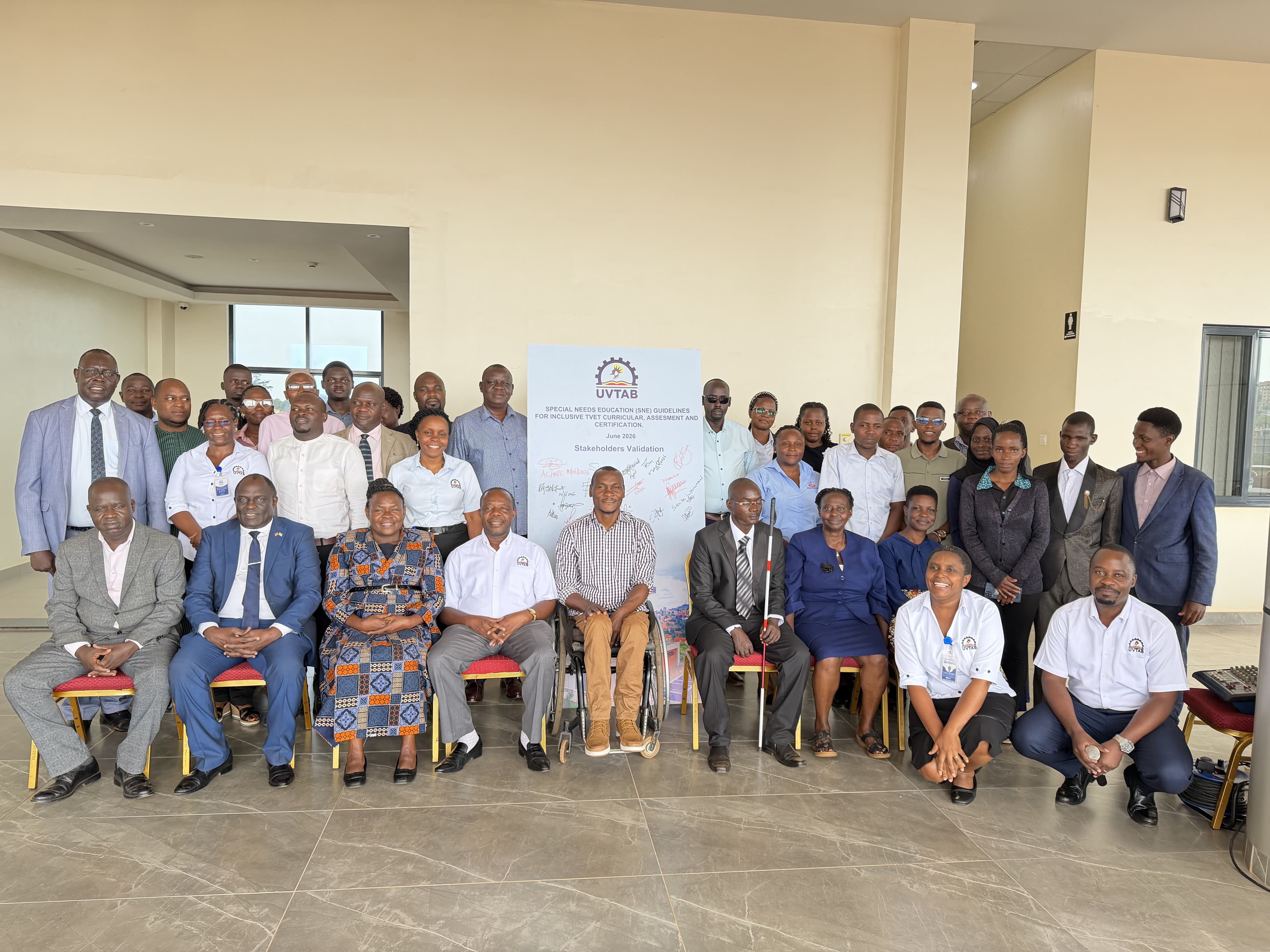
Extracted from PML Daily. KAMPALA – The Uganda Vocational and Technical Assessment Board (UVTAB) on Wednesday convened a stakeholders’ meeting to validate Special Needs Education (SNE) Inclusion Guidelines aimed at making Technical and Vocational Education and Training (TVET) curricula, assessment, and certification more inclusive for learners with disabilities and other special educational needs. The meeting brought together education officials, special needs education experts, development partners, and training providers to discuss the implementation of the guidelines, which are expected to strengthen equitable access to vocational training and assessment across the country. Speaking on behalf of UVTAB Executive Secretary Onesmus Oyesigye, Principal Curriculum Specialist Peter Oyo said the board remains committed to ensuring that assessment and certification systems are accessible, reliable, and responsive to the diverse needs of all trainees. Oyo explained that UVTAB is mandated to develop and review TVET curricula, assess and certify competencies, accredit assessment centres, and recognize skills acquired through both formal and informal learning pathways. “In line with the Government of Uganda’s commitment to inclusive development and the principle of leaving no one behind, a Special Needs Education Unit has been established to coordinate and promote inclusion across all functions,” Oyo said. He noted that the participation of learners with special needs in TVET assessments has steadily increased, with hundreds of candidates with disabilities, refugees, and other vulnerable groups having been registered and assessed in recent years. “The new Inclusion Guidelines provide a framework to ensure consistency, fairness, and quality in the delivery of inclusive assessment services. They will strengthen our efforts to implement national policies, support government priorities, and enhance quality assurance mechanisms,” he added. Oyo also acknowledged the contributions of technical experts, partners, and stakeholders who participated in developing and reviewing the guidelines, urging participants to actively contribute to their successful implementation. The Ministry of Education and Sports welcomed the initiative, describing it as a major milestone in advancing quality, equitable, and inclusive education. Assistant Commissioner for Special Needs Education Sarah Ayesiga challenged persistent societal misconceptions and discrimination against persons with disabilities, despite growing awareness and advocacy efforts. “We are living in an era where the light is on, yet there are still people living in darkness,” Ayesiga said, citing a recent case in which a school reportedly rejected a child living with albinism from joining its boarding section due to harmful myths and misconceptions. She emphasized that learners with disabilities should be viewed as individuals with abilities, talents, and potential rather than limitations. “If someone is blind or uses a wheelchair, society often asks, ‘How will you manage?’ instead of asking what support can be provided. Every child has potential, and it is our responsibility to help them explore and develop it,” she said. Ayesiga said the competency-based curriculum currently being rolled out in Uganda seeks to identify and nurture what learners can do rather than focusing solely on academic performance. “No child should be left behind or made to feel they cannot contribute because of their body or abilities. These guidelines will help us ensure accessibility, assess potential fairly, and support every learner to succeed,” she said. She called on vocational institutions, educators, and assessment bodies to commit themselves to admitting, supporting, and fairly assessing learners with disabilities. Meanwhile, UVTAB’s Allen Ayebazibwe provided an overview of the challenges that prompted the development of the guidelines, highlighting gaps within existing curricula and assessment systems. According to Ayebazibwe, candidates with visual impairments often struggle to complete practical assessments in areas such as computer applications and photojournalism, while learners with hearing impairments face difficulties in language practical examinations that require speaking skills. She also pointed to challenges faced by candidates with physical disabilities, including those with one hand or no hands, who are sometimes expected to undertake practical sign language assessments without appropriate accommodations. “Many of these candidates experience exclusion during training and assessment, including being left out of dormitories or learning activities. As assessors, we often face difficulties in determining the most appropriate support mechanisms,” Ayebazibwe said. She explained that the newly developed guidelines provide a framework for identifying and addressing such barriers through reasonable accommodations, resource allocation, and inclusive assessment practices. “The guidelines will ensure that assessment centres uphold the rights of candidates with special needs and provide the necessary support to enable them to demonstrate their competencies fairly,” she said. Stakeholders were urged to support the implementation of the guidelines and work collectively to create a TVET system where all learners, regardless of disability or circumstance, have equal opportunities to acquire skills, demonstrate competence, and obtain certification. The validation meeting marks another step in Uganda’s efforts to strengthen inclusive education and ensure that vocational training institutions are equipped to serve all learners without discrimination.

Read story