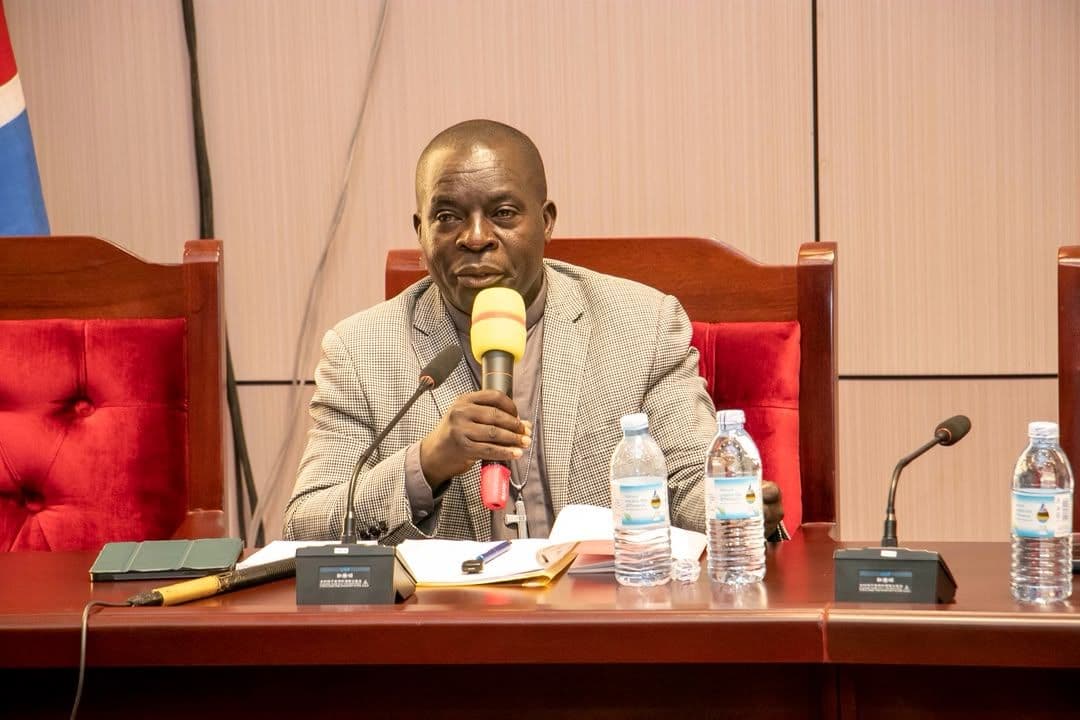

UVTAB enlists clergy to fight youth unemployement through skillling drive

Extracted from Monitor.
01 November 2026 | In a bid to curb rising youth unemployment, the Uganda Vocational and Technical Assessment Board (UVTAB) has partnered with religious leaders to promote vocational skills training across the country.
Speaking during a consultative meeting with representatives of various religious denominations at the UVTAB offices in Kyambogo, Kampala, on October 30, the Executive Secretary of UVTAB, Mr. Onesmus Oyesigye, called on faith leaders to utilize their pulpits on Fridays, Saturdays, and Sundays to encourage their followers to embrace technical hands-on training as a viable pathway to job creation.
"Every Sunday, Saturday, and Friday, you interface with an audience that believes in you. So we ask you to help us preach the gospel of skills- based training," Mr. Oyesigye said. "You are among our key stakeholders who can help us spread it and tackle unemployment. There are people who have so many papers, but what they need is just three months of skills training to take off and start working, yet they lack this information."
He lamented the current structure of the country's theoretical education framework, noting that many graduates remain jobless despite holding academic qualifications.
"Every family has a member who is unemployed. Every day, I get a call from someone asking me for a job which I don't have, but I guide them to opt for skilling. Some of them take my advice and create for themselves jobs, while those who question and undermine skilling remain jobless and frustrated," Mr. Oyesigye added. "The way our formal education system was structured is vague. You find a Civil Engineer not knowing what to do."
To address the recurring issue of skills mismatch cited by employers, the government is shifting university and tertiary education from knowledge-based training to Competence-Based Education and Training (CBET). The implementation of CBET is scheduled to officially commence in the 2027/2028 academic year to ensure graduates align with labor market demands.
Acknowledging that Technical and Vocational Education and Training (TVET) can be costly, Mr. Oyesigye revealed that UVTAB is proposing to the government that TVET education at the lower levels (Level One and Level Two) be made tuition-free to widen access. He also appealed to parents to stop viewing vocational training as a last resort for academic failures, urging them to direct educated but unemployed youth toward short-term vocational courses.
"If you have a son or a daughter who acquired qualifications through formal education but has been moving around with envelopes for the last five years or so looking for formal jobs without success, encourage them to go for skilling in some of these institutions. Three to six months of training is enough for someone to get employment," he explained, describing the growing number of unengaged youth as a "lifetime bomb."
Official records indicate that out of Uganda's predominantly young population-where over 70 percent are under the age of 30-about 5.25 million Ugandans aged 18 to 30 (50.9 percent) are Not in Employment, Education. or Training (NEET).
Welcoming the initiative, Rev. Daniel Token Wejuli, a programme specialist for spirituality and mindset change at the Inter-Religious Council of Uganda (IRCU), affirmed that faith platforms reach over 25 million believers weekly, making clergy effective agents for mindset
"We have been scratching the back of the government to have something for young people, and we believe that tackling unemployment starts with skilling Ugandans," Rev. Wejuli said. "Our colonial masters deliberately hid the real economy from us by introducing a theoretical education system. We are just trying to undo what they designed, but we need to take skilling seriously to create jobs."
Highlighting the economic strain caused by joblessness, Mr. Moses Kasagwa, the Executive Director of the TVET Council, noted that expanding vocational education would lower the country's high dependency burden, which currently stands at 83 percent.
"Your support will bring glory to the country. Currently, almost every Ugandan has a dependant, some of whom are adults. About 50 percent of the youth linger around because they have nothing to do," Mr. Kasagwa explained.
To further ease entry into vocational training, Dr. Wilfred Nahamya, UVTAB's Deputy Executive Secretary in charge of assessment, noted that the primary requirement for enrolling in certain skills programmes is simply showing interest. He added that UVTAB has embarked on assessing and certifying competencies for TVET graduates, including those who acquired their skills informally, to ensure standard recognition by employers.
More photos